Bunions Treatment in the Hunt County, TX: Greenville, Rockwall County, TX: Rockwall, Rowlett, Fate, Royse City, Heath, Collin County, TX: Plano, Wylie, Sachse, Frisco, Dallas County, TX: Dallas, Richardson, Garland, Mesquite, Irving, Carrollton, Addison, Farmers Branch, Coppell, Lewisville, Rowlett (partial), Sachse (partial), Balch Springs, Seagoville, Denton County, TX: Lewisville, Flower Mound, The Colony, Highland Village, Denton, Tarrant County, TX: Grapevine areas

Bunion Treatment

What is a Bunion?

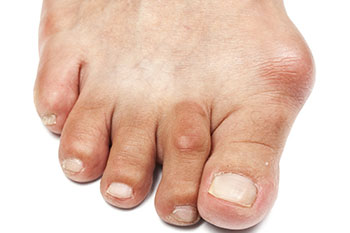
A bunion (Hallux Valgus) is a deformity of the foot that visually manifests as a boney “bump” at the base of the big toe, on the inside of the foot.

What causes the bump is actually a misalignment of the knuckle of the big toe. The knuckle is the joint which connects the first bone of the big toe with the first metatarsal bone of the foot. When this misalignment develops, it causes the metarsal bone to jut out while the big toe leans towards the second toe, rather than pointing straight ahead.

Symptoms and Diagnosis of a Bunion

Aside from the visible deformity, it may be painful to wear shoes, or even to find shoes that fit comfortably over the bump. There may also be pain on the bottom of the foot.

A podiatrist will perform a physical examination and review your health history. X-rays will also be necessary to determine the severity of the bunion and whether arthritis is present.

Treatments for Bunions

There are various treatments available to treat a bunion, which will vary on its severity. The options a podiatrist may suggest can be either conservative (non-surgical) to reduce symptoms or surgical to correct the deformity.

Conservative: A podiatrist may try to minimize symptoms by suggesting changes in footwear—to provide a taller toe box and more comfortable shoes. Custom orthotics may also be used to provide padding or to reposition the big toe. They may also try to modify current footwear by stretching shoes to prevent irritation of the bunion. Toe spacers and bunion sleeves can also provide bunion relief.

Surgical: There are different types of bunion surgery that can be performed to correct the deformity. Realignment surgeries, or osteotomies, return bones and ligaments to their normal positions. Bunionectomies, or exostectomies remove part of the metarsal head to remove the bulge. Fusion surgeries stop the movement bones to reduce pain. Implant surgeries remove the damaged joint with an artificial one.

If you are dealing with a painful condition that you believe might be a bunion, make an appointment with a podiatrist for an examination and to discuss your treatment options.

Bunions (FAQs)

What are bunions?
A bunion is a bony bump that forms at the base of the big toe joint. It is considered a deformity, as it changes the shape of the feet, creating a protruding bump on the side of the foot while pushing the big toe towards the smaller toes next to it. Bunions can be painful, red, tender, and stiff. They may restrict the range of motion of the affected toe and tend to develop corns and calluses over the top of the bump.
What causes bunions?
Bunions may have a variety of potential causes. They may be caused by wearing tight, narrow, ill-fitting shoes over long periods of time or from inflammatory conditions like rheumatoid arthritis. Genetics may also play a role, as some people inherit foot shapes and structures that are more likely to develop bunions.
How can you stop bunions from getting worse?
Early detection and treatment is key to slowing or stopping the progression of a bunion. Your podiatrist will likely recommend footwear modifications, such as wearing wider, more comfortable shoes or custom orthotics that support the foot and give the toes room. Special bunion pads can be used to relieve pain and pressure over the bunion, while over-the-counter medications or ice can be used to reduce inflammation.
Is it possible to remove a bunion?
Bunions can be permanently removed through a surgical procedure known as a bunionectomy. During this surgery, the doctor may cut, realign, or remove portions of bones, ligaments, and tendons to get rid of the bunion. This is typically an outpatient procedure, which means that you get to go home the same day as the surgery.

Connect With Us

Advanced Podiatric Procedures & Services in the areas