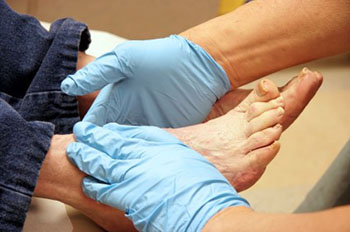
Diabetic foot treatment in the Hunt County, TX: Greenville, Rockwall County, TX: Rockwall, Rowlett, Fate, Royse City, Heath, Collin County, TX: Plano, Wylie, Sachse, Frisco, Dallas County, TX: Dallas, Richardson, Garland, Mesquite, Irving, Carrollton, Addison, Farmers Branch, Coppell, Lewisville, Rowlett (partial), Sachse (partial), Balch Springs, Seagoville, Denton County, TX: Lewisville, Flower Mound, The Colony, Highland Village, Denton, Tarrant County, TX: Grapevine areas

Diabetic Foot Care

Diabetes is a disorder that impedes the body’s natural ability to turn food into energy. Insufficient levels of insulin, or an inability to use it properly, causes too much glucose to stay in the bloodstream. Over time, this can lead to damaged blood vessels, nerves, and organs.

People with diabetes often have nerve damage and poor circulation in the feet. This compromises their ability to detect and heal cuts or other abrasions. Even the smallest cut in a diabetic’s foot can turn into a wound that won’t heal if it is not spotted and treated promptly. This may develop into a deep ulcer and lead to infection, gangrene and, in worse case scenarios, amputation.

Diabetic Foot Care Tips

Daily foot care is essential for a person with diabetes to maintain healthy feet and avoid serious foot problems from developing. Here are some basic diabetic foot care tips:

1. Inspect Feet Daily. Examine your feet and toes every day and see a podiatrist if you spot any cuts, blisters, bruises, hot spots or other disturbances in the skin.

2. Wash/Dry/Moisturize Your Feet Daily. Keep your feet clean and dry, especially between the toes. Moisturize your feet, except between the toes, if they feel rough or dry.

3. Maintain Your Toenails. Keep your toenails trimmed straight across, but not too short which might lead to an ingrown toenail. Have a podiatrist trim your nails if you cannot do it.

4. Wear Proper Footwear. Shoes should fit properly, be made of natural materials, and be comfortable with plenty of room in the toe box. Socks should always be worn with shoes, and they should not be tight at the ankles. Diabetic socks can help circulation and keep moisture away from your feet. Never walk barefoot.

5. Protect Your Feet from Extreme Temperatures. Never use a heating pad or electric blanket on your feet, and protect them from extreme heat and cold.

6. Never Use Sharp Tools on Your Feet. If you have a corn or callus, do not attempt to remove it yourself. Schedule an appointment with a podiatrist to have them take care of it safely and professionally.

It is very important have your feet inspected and monitored regularly by a podiatrist. Schedule an appointment today to ensure your feet are in good health and to learn how to best maintain the health of your feet.

Diabetic Foot Care (FAQs)

How does diabetes affect the feet?
Diabetes is a systemic condition that affects multiple parts of the body—and the feet are no exception. Those with diabetes can be more likely to develop diabetic peripheral neuropathy and poor circulation. Neuropathy is a form of nerve damage that can lead to a loss of sensations in the feet. With a diminished ability to feel pain, small cuts, scrapes, or wounds can go undetected until they have progressed and become more serious. These wounds will also heal more slowly and poorly due to reduced circulation, which doesn’t allow enough blood and nutrients to travel to the damaged area.
What are diabetic foot ulcers?
Diabetic foot ulcers (DFUs) are wounds that can form on the lower limbs. These wounds usually heal slowly and poorly, and are at an increased risk of becoming infected.
How can I prevent diabetic foot problems?
If you have diabetes, maintaining the health of your feet is paramount. It is suggested that you inspect your feet daily for any cuts, scrapes, sores, or other injuries. Take note of changes in appearance, such as skin discoloration, hair loss, or deformities, and any new sensations, including pain, numbness, tingling, or changes in skin temperature. If you notice any symptoms, see a podiatrist as soon as possible. Early detection and treatment of foot problems will help prevent complications later on.
When should I see the podiatrist for diabetic feet?
If you have diabetes, it is a good idea to see a podiatrist regularly. This specialist can help you maintain the health of your feet—and therefore your mobility and independence—by detecting and treating any foot problems before they progress. A podiatrist can also help by treating any existing foot wounds and teaching you about how to prevent foot problems in the future.

Connect With Us

Advanced Podiatric Procedures & Services in the areas