Hammertoes Treatment
What is a Hammertoe?
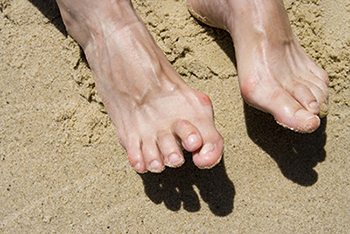
A hammertoe is a progressive deformity that causes the toe to be stuck in a bent position rather than laying flat. The toe’s middle joint bends upward, while the end of the toe points downward, making the toe resemble the head of a hammer.
Hammertoes occur most frequently in the 2nd toe, although the condition can sometimes form in the 3rd and 4th toes as well. Women are more likely to have hammertoes than men.
The Causes of Hammertoe
An imbalance in the ligaments, tendons, and muscles of a toe are what causes it to be fixed in an unnatural, bent position. There are a variety of factors that cause this imbalance, which occurs over time:
• Tight footwear
• High heels
• Pointy shoes
• Genetics
• Injury
• Old age
• Diabetes
Hammertoe Symptoms
While the hammertoe is developing, it will be flexible and have the ability to be straightened out. As the condition progresses, the toe becomes inflexible and then rigid. A variety of symptoms may be present, along with the telltale hammerhead resemblance. Other symptoms:
• A corn may form on the top of the affected joint
• It may be painful to wear shoes
• The affected joint may be swollen and red
• There may be limited movement of the toe
• It may be difficult or impossible for the toe to lie flat
• The ball of the foot may be painful under the affected toe
How a Podiatrist May Treat a Hammertoe
Treatment will vary, depending on how far along the condition is. A podiatrist may use either conservative or surgical techniques to treat a hammertoe.
Conservative (non-invasive) treatment. If the hammertoe is still flexible, a podiatrist may create custom orthotics and pads to redirect pressure and relieve pain. They will also provide guidance on changes in footwear and socks. Since the deformity is caused by an imbalance in tendons, muscles, and ligaments, the podiatrist may also suggest certain exercises and stretches to strengthen the feet and toes.
Surgical treatment. Once a hammertoe has become fixed in its bent position, surgery may be necessary to fix the deformity. There are a variety of procedures podiatric surgeons use to fix a hammertoe, including:
• Transferring tendons
• Lengthening tendons that have become contracted
• Replacing joints
• Removing the joint knuckle to allow space for the toe to straighten out
• Stabilizing the joint with pins
• Immobilizing the joint to help new bone growth
Since it is advisable to treat hammertoes while they are still flexible, make an appointment right away with your podiatrist for an examination and to go over your treatment options.
