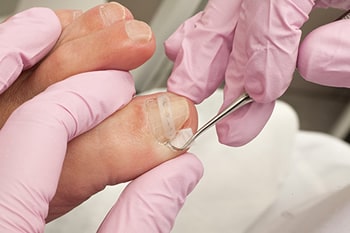
A toenail is considered ingrown when the edges of the toenail grow into the skin next to it. Most ingrown toenails occur in the big toe.
Ingrown toenails can occur in men and women of all ages, although they are considered most common in older adults since nails thicken as we age and it can be difficult for seniors to trim their toenails properly.
Causes of Ingrown Toenails
Improper toenail trimming is the leading cause of ingrown toenails among any age group. It is important to trim the toenails straight across, not rounded, and not too short, which can encourage the nail to grow into the skin rather than over it.
Other causes including:
● Genetics
● Irregular toenails that are naturally curved
● Toenail injuries
● Shoes, socks, or stockings that are too tight or narrow and put pressure on the toes.
● Sports and other physical activities that involve repeated kicking, or that consistently apply pressure on the feet and toes.
Symptoms of Ingrown Toenails
Ingrown toenails in the early stages can be painful, causing the surrounding skin to be swollen, hard, red, and tender. There may even be fluid that collects around the affected toe.
If an ingrown toenail goes untreated, it may become infected and lead to more serious symptoms such as:
● More intense pain, redness, and swelling
● Bleeding
● Oozing pus
● Odor
● Skin that becomes overgrown surrounding the toe
● Warmth around the affected toe
Treatment Options for Ingrown Toenails
A minor ingrown toenail may heal by itself. However, if it is very painful, infected, or if you have diabetes or any circulatory disorder, a podiatrist should be consulted. A podiatrist may use a variety of techniques to ease pain and swelling, cure any infection with prescription medications, and to bring the nail back to a normal growth pattern.
Treatments will vary, depending on the severity of the condition, any underlying conditions the patient may have, and whether there is an infection.
Lifting the nail. Slightly ingrown nails can be gently lifted off the nail bed to relieve pressure, with a piece of cotton or splint to keep the nail in position and guide it as it regrows.
● Partial removal of the nail. If the condition is more advanced and there is pus, intense pain, or redness, the podiatrist may suggest removing the part of the nail that has become ingrown.
● Full removal of nail and surround tissue. If the condition becomes chronic, the podiatrist may recommend removing the faulty nail and underlying tissue.
If you have a painful ingrown toenail that has not quickly healed on its own or if you have diabetes or a circulatory issue, get the nail treated professionally by a podiatrist.
