Plantar warts treatment in the Hunt County, TX: Greenville, Rockwall County, TX: Rockwall, Rowlett, Fate, Royse City, Heath, Collin County, TX: Plano, Wylie, Sachse, Frisco, Dallas County, TX: Dallas, Richardson, Garland, Mesquite, Irving, Carrollton, Addison, Farmers Branch, Coppell, Lewisville, Rowlett (partial), Sachse (partial), Balch Springs, Seagoville, Denton County, TX: Lewisville, Flower Mound, The Colony, Highland Village, Denton, Tarrant County, TX: Grapevine areas

Plantar Warts Treatment

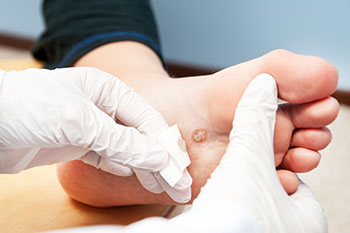
Plantar warts are thickened lesions of skin that develop mainly on the bottom of your foot after contact with the human papillomavirus (HPV). The HPV leads to keratin building up on the skin, resulting in a plantar wart, or a cluster of warts (mosaic).

Symptoms of a Plantar Wart

Plantar warts typically grow on the sole of the foot, however they can develop anywhere on the foot. A plantar wart can:

• Be flat and thickened

• Have a tiny black “dot” in the center of the wart, which is actually a minuscule capillary with dried blood in it.

• Be hard, fleshy, and light or skin-colored

• Be painful when walking

• Spread into a cluster of warts called a mosaic

How Do Plantar Warts Develop?

HPV lives in moist, damp environments such as swimming pool areas, locker room floor, public showers, etc. A person can become infected by the virus through direct contact with it by walking through a puddle or other breeding grounds for HPV.

The virus has easy access to the skin of the feet if the person is walking barefoot. Cracks or weak spots in the skin make it even easier for the virus to enter. That is why it is important to never walk barefoot in these areas—especially those with weakened immune systems, who are at an increased risk of developing a plantar wart.

Treating a Plantar Wart

Plantar warts can be very hearty and difficult to treat at home because even if the wart is gone, the virus may still be lying dormant underneath the skin. It can sometimes take years for a plantar wart to dissolve on its own.

A podiatrist can get rid of plantar warts efficiently, rapidly, safely and completely using a variety of protocols, depending on how far along the wart is and the medical history of the patient.

Peeling. In some patients, salicylic acid may be used to safely thin down the wart and cause infected skin cells to peel off.

Freezing. A technique call cryotreatment can be used, which freezes the wart and eventually eliminates it.

Cutting. The podiatrist may try to scrape the wart off (curetting) or cut it out by excision.

Laser Therapy. This non-invasive treatment gets to the wart’s blood supply which causes the wart to fall off within a couple of weeks.

If you suspect you have a plantar wart or a mosaic of plantar warts, get treated by a podiatrist for quick and lasting results.

Plantar Warts (FAQs)

What are plantar warts?
Plantar warts are benign, fleshy growths that can occur on the bottom of the feet due to a viral infection. The warts may or may not be painful, depending on their location on the foot. Warts that are located on areas that bear a lot of weight, like the heel, may grow inwards due to pressure from walking or standing, which can be particularly painful.
What do plantar warts look like?
Plantar warts can occur individually or in a cluster. They are typically fleshy, circular areas of dry, grainy skin. Warts on the feet are usually flat, but can sometimes be raised. They may be small or large. Warts can be differentiated from corns and calluses by the small, black dots located at their centers. These dots are actually the blood supply to the wart.
What causes plantar warts?
Plantar warts are caused by the human papillomavirus (HPV) getting into the skin of the feet. HPV is highly contagious and can be contracted through contact with infected surfaces, like locker room floors, or infected individuals. This is why you should avoid going barefoot in public spaces and sharing personal items like shoes, socks, and towels.
How are plantar warts treated?
There are a variety of treatments available for plantar warts. Some warts can go away on their own or with the help of over-the-counter treatments. Others may require medical intervention, particularly if they are large, wide-spread, painful, showing signs of infection, or if you have a systemic illness like diabetes that can interfere with healing. Medical treatment options for plantar warts include applying salicylic acid to the wart, freezing or burning it off, laser treatments, or surgical excision. Talk to your podiatrist to determine the right course of treatment for you.

Connect With Us

Advanced Podiatric Procedures & Services in the areas